


Introduction
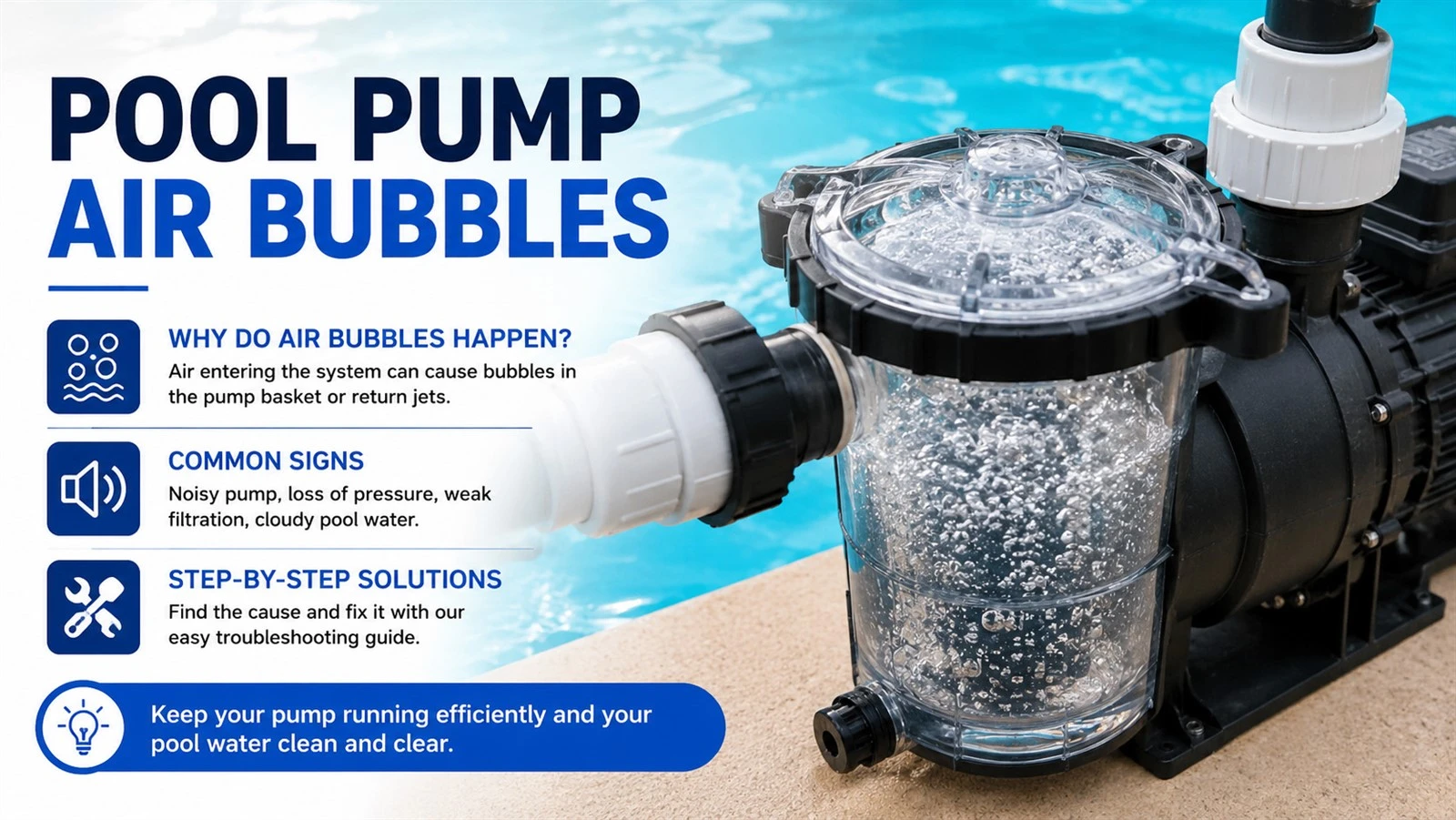
Seeing air bubbles in a pool pump can be confusing for many pool owners. Sometimes the pump basket has small bubbles under the clear lid. Sometimes bubbles come out from the return jets into the pool. In some cases, the pump may also become noisy, lose pressure or fail to move water smoothly.
A few tiny bubbles during startup may not be a serious problem. However, continuous air bubbles usually mean that air is entering the pool circulation system. If the issue is ignored, the pump may lose prime, filtration may become weaker, and the pool water may turn cloudy.
This guide explains the common causes of pool pump air bubbles and how to fix them step by step.
Are Air Bubbles in a Pool Pump Normal?
Small bubbles can appear for a short time when the pump first starts, especially after cleaning the basket, opening the pump lid or restarting the system.
But if bubbles keep moving inside the pump basket or continue coming from the return jets, the system should be checked. A healthy pool pump should keep a stable flow of water with little or no visible air in the pump basket.
The location of the bubbles can help you understand the problem. Bubbles in the pump basket often suggest air is entering before or at the pump. Bubbles from the return jets usually mean air has already passed through the pump and filter and is being pushed back into the pool.
1. Pool Water Level Is Too Low
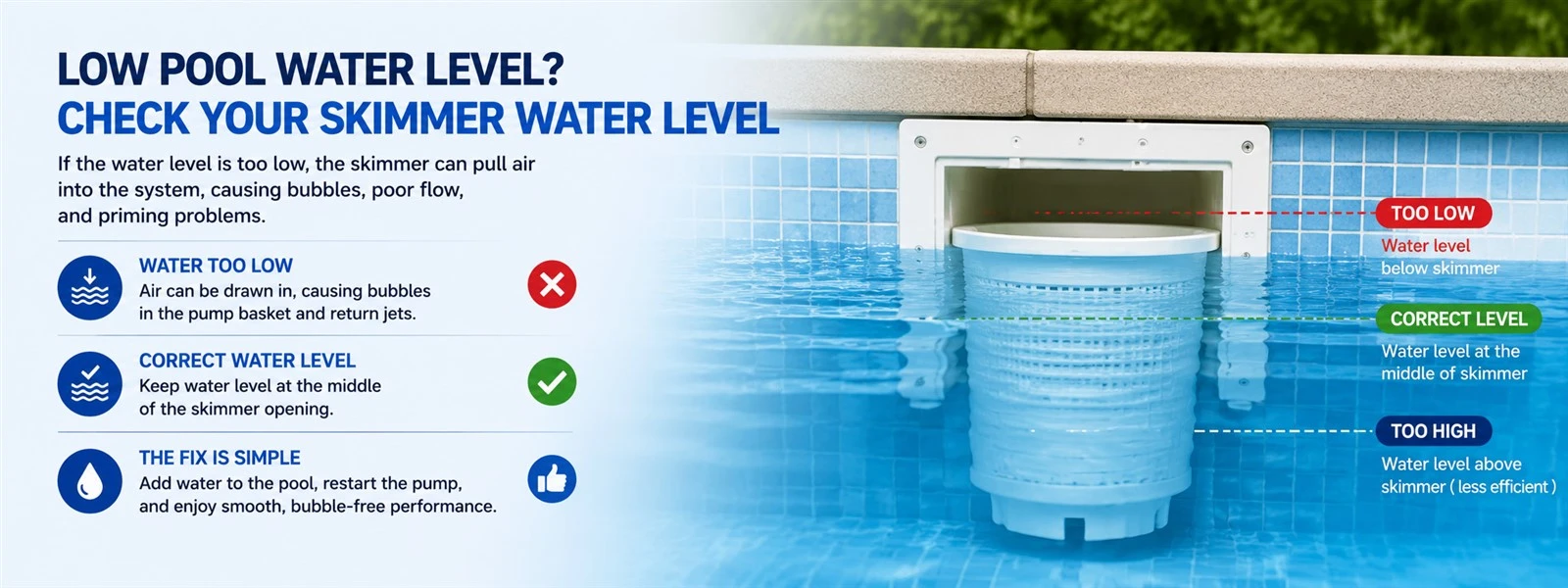
Low pool water level is one of the first things to check. If the water level drops below the correct position, the skimmer may pull air into the system together with water.
When this happens, bubbles may appear in the pump basket and return jets. The pump may also lose water flow or become harder to prime.
The fix is simple: add water to the pool until the water level reaches the middle area of the skimmer opening. After that, restart the pump and observe whether the bubbles become less noticeable.
2. Pump Lid Is Not Sealed Properly
The pump lid must seal tightly to prevent air from entering the pump basket. If the lid is loose, dirty or not installed correctly, air can be pulled into the pump during operation.
The O-ring under the pump lid is also important. If it is dry, cracked, flattened or out of position, the seal may not be tight enough.
To fix this problem, turn off the pump, open the lid and inspect the O-ring. Clean the sealing surface, reinstall the O-ring correctly and close the lid firmly. If the O-ring is damaged, replace it with a new one.
3. Skimmer Basket or Pump Basket Is Dirty
A dirty skimmer basket or pump basket can restrict water flow. When the pump cannot receive enough water, air may collect in the pump basket.
Leaves, hair, insects and small debris are common causes of blockage. If the basket is full, the pump may still run, but the water flow will become weak and unstable.
Turn off the pump before cleaning the basket. Remove all debris, rinse the basket and check whether it is cracked or damaged. A broken basket should be replaced because debris may pass through and reach the impeller.

4. Air Leak on the Suction Side
The suction side is the part of the pool system before water enters the pump. It includes the skimmer line, suction pipe, valves, unions, fittings and pump inlet.
If any part of this section is loose, cracked or poorly sealed, air may be pulled into the system. This is one of the most common reasons for continuous bubbles in the pump basket.
Check the pipe unions, valve seals, drain plugs and fittings near the pump inlet. Tighten loose connections carefully. If bubbles continue and the leak cannot be found, the suction pipe may need professional inspection.
5. Loose Drain Plugs or Pipe Unions
Many pool pumps have drain plugs near the pump housing. These plugs are small, but they can cause air leaks if they are loose or if the sealing gasket is worn.
Pipe unions around the pump can also allow air to enter if they are not tightened properly. This problem often appears after pump maintenance, winterizing or installation work.
Check these small connection points carefully. Make sure the drain plugs are tight and the union seals are clean and in good condition.
6. The Pump Is Not Fully Primed
Sometimes bubbles appear because the pump has not been fully primed after cleaning or restarting. If there is too much air inside the pump housing, the pump may struggle to build stable water flow.
To solve this, turn off the pump, open the pump lid and fill the pump housing with water. Then close the lid tightly and restart the pump.
If the pump removes the air after a short time and the water flow becomes stable, the problem may only have been incomplete priming. If air keeps returning, check for leaks or blockages.
7. Blocked Impeller or Weak Water Flow
If the pump basket looks clean but water flow is still weak, the impeller may be blocked by small debris. A blocked impeller can reduce flow and create unstable circulation.
In this situation, the pump may sound different, the filter pressure may drop and bubbles may stay inside the pump basket.
Cleaning the impeller usually requires opening part of the pump. If the user is not familiar with pump maintenance, it is better to ask a professional technician to handle it.
8. Installation or Pipe Design Problems
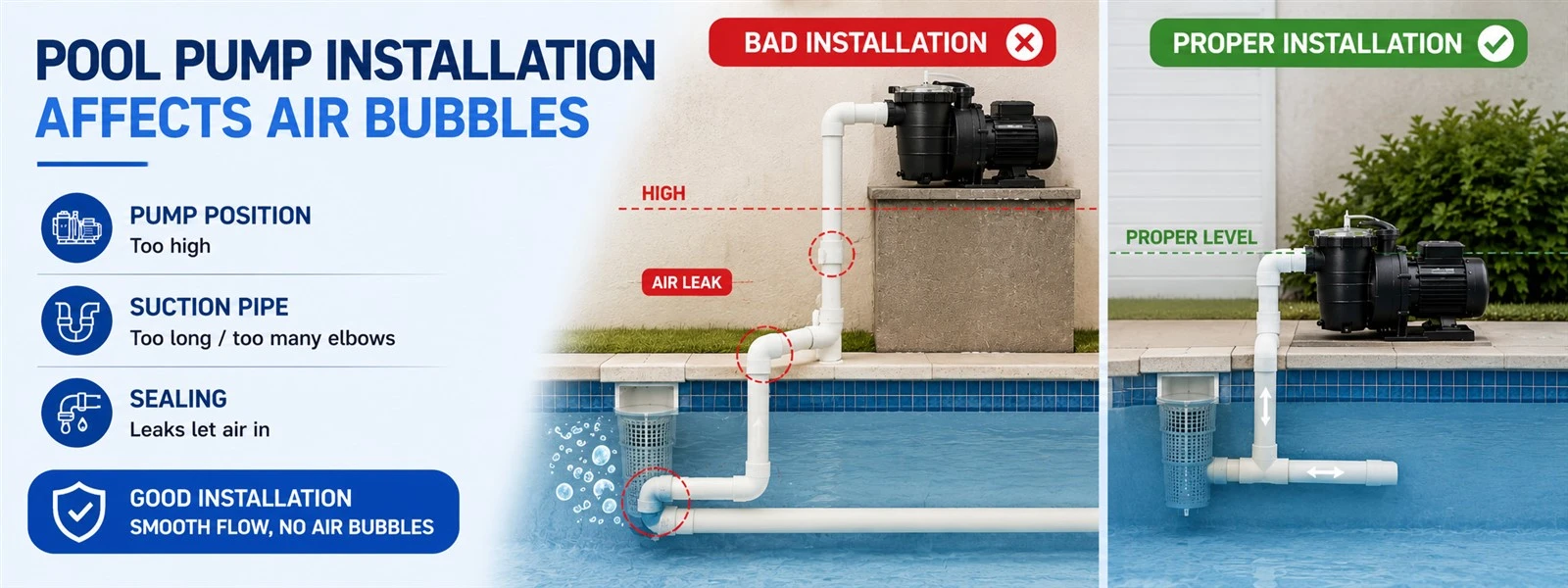
Air bubble problems can also be related to installation. If the pump is installed too high above the water level, or if the suction pipe is too long, too narrow or has too many elbows, the pump may have difficulty pulling water smoothly.
Poor sealing at pipe joints can also create repeated air bubble problems. This is especially important in new pool projects or pump replacement projects.
A suitable pump position, proper pipe size and reliable sealing can help the pool pump run more smoothly and reduce future air problems.
Quick Troubleshooting Checklist
If you see air bubbles in your pool pump, start with these simple checks:
Check whether the pool water level is high enough.
Make sure the pump lid is closed tightly.
Inspect the pump lid O-ring.
Clean the skimmer basket and pump basket.
Check drain plugs and pipe unions.
Make sure all suction-side valves are open.
Prime the pump again with clean water.
Look for loose fittings or cracked pipes.
If the bubbles disappear after one of these steps, the problem has likely been found. If bubbles continue, the suction line or pump installation may need professional inspection.
Conclusion
Air bubbles in a pool pump are usually a sign that air is entering the circulation system. The most common causes include low water level, poor pump lid sealing, dirty baskets, suction-side air leaks, loose drain plugs, incomplete priming, blocked impeller or installation problems.
Most simple causes can be checked and fixed quickly. Start with the water level, pump lid, O-ring and baskets before moving to pipes and fittings.
A stable pool pump should move water smoothly with little visible air. If bubbles continue after basic troubleshooting, professional inspection may be needed to protect the pump and keep the pool system working properly.
Looking for a reliable swimming pool pump supplier? Contact us to get a suitable pool pump solution according to your pool size, flow rate, voltage, frequency and installation requirements.