


Introduction
A pool pump should quickly fill with water after it starts. When the pump basket stays empty, fills only halfway, or shows many air bubbles, the pump may have a priming problem.
In simple terms, "not priming" means the pump cannot build a stable water flow from the swimming pool to the filtration system. The motor may still be running, but the pump is not moving water properly.
This problem does not always mean the pump is broken. In many cases, it is caused by low pool water level, air entering the suction line, a dirty basket, a loose pump lid or an incorrect valve position

Common Signs of a Priming Problem
A pool pump priming problem is usually easy to notice. You may see one or more of these signs:
The pump basket does not fill with water.
There are many air bubbles under the transparent pump lid.
The return jets have weak or no water flow.
The filter pressure is lower than normal.
The pump makes a louder or rougher sound than usual.
Water circulation becomes poor and the pool water turns cloudy.
When these signs appear, the pump should be checked as soon as possible. A pool pump should not run dry for a long time because dry running can damage the seal and other internal parts.
Check the Pool Water Level First
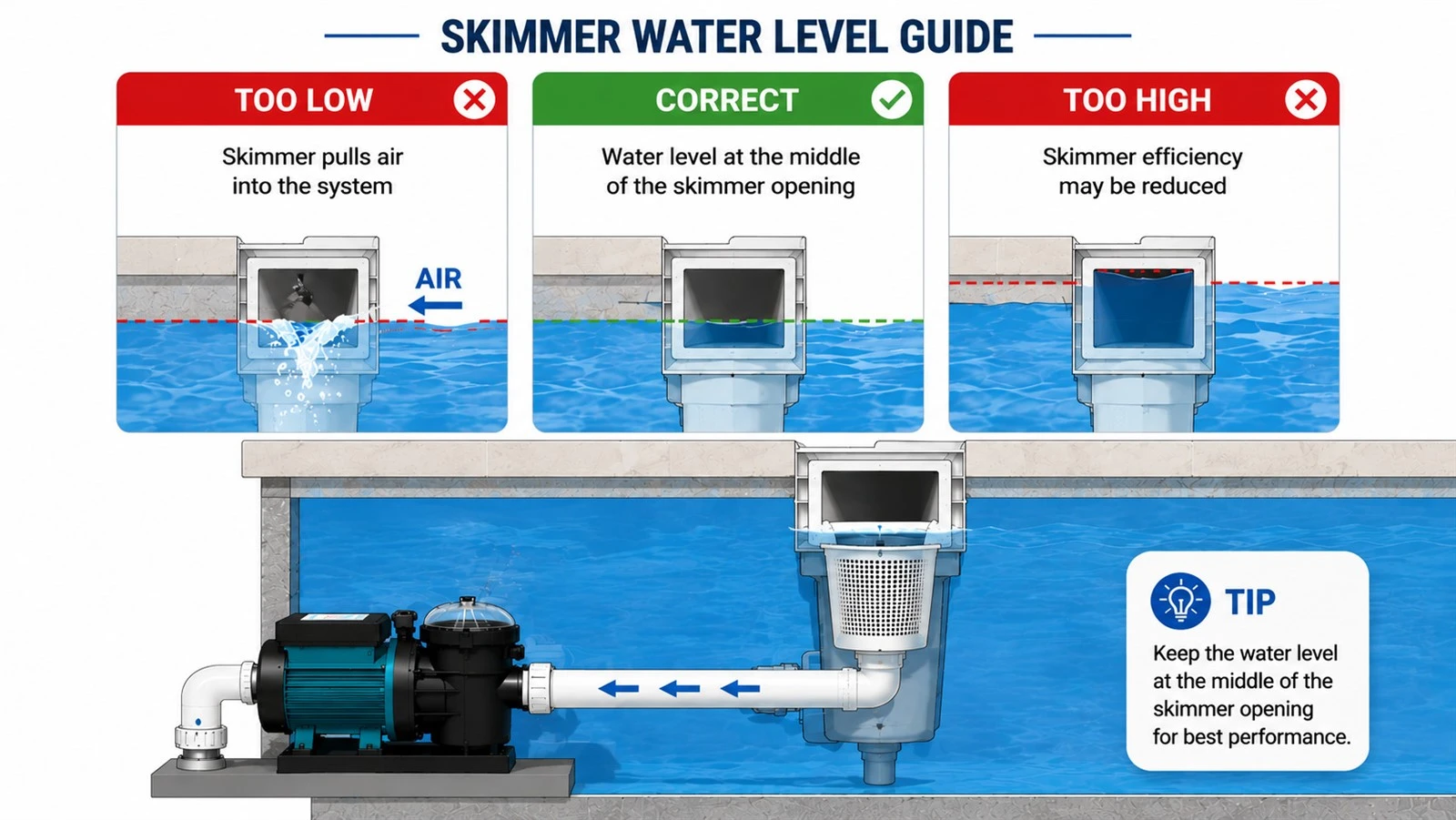
The first thing to check is the pool water level. If the water level is too low, the skimmer may pull air into the suction line instead of water.
This is one of the easiest problems to fix. Add water to the pool until the water level reaches the correct position, usually around the middle of the skimmer opening.
After adding water, restart the pump and watch the pump basket. If the basket fills with water and the bubbles disappear, the problem was likely caused by low water level.
Inspect the Pump Lid and O-Ring
The pump lid must be sealed tightly. If the lid is loose or the O-ring is dry, dirty, cracked or out of position, air can enter the pump from the top.
Even a small air leak can make the pump lose prime. This is why the pump lid area should always be checked carefully.
Turn off the pump before opening the lid. Clean the O-ring and the sealing surface, then reinstall the lid properly. If the O-ring is damaged or has lost elasticity, it should be replaced.
Clean the Skimmer Basket and Pump Basket
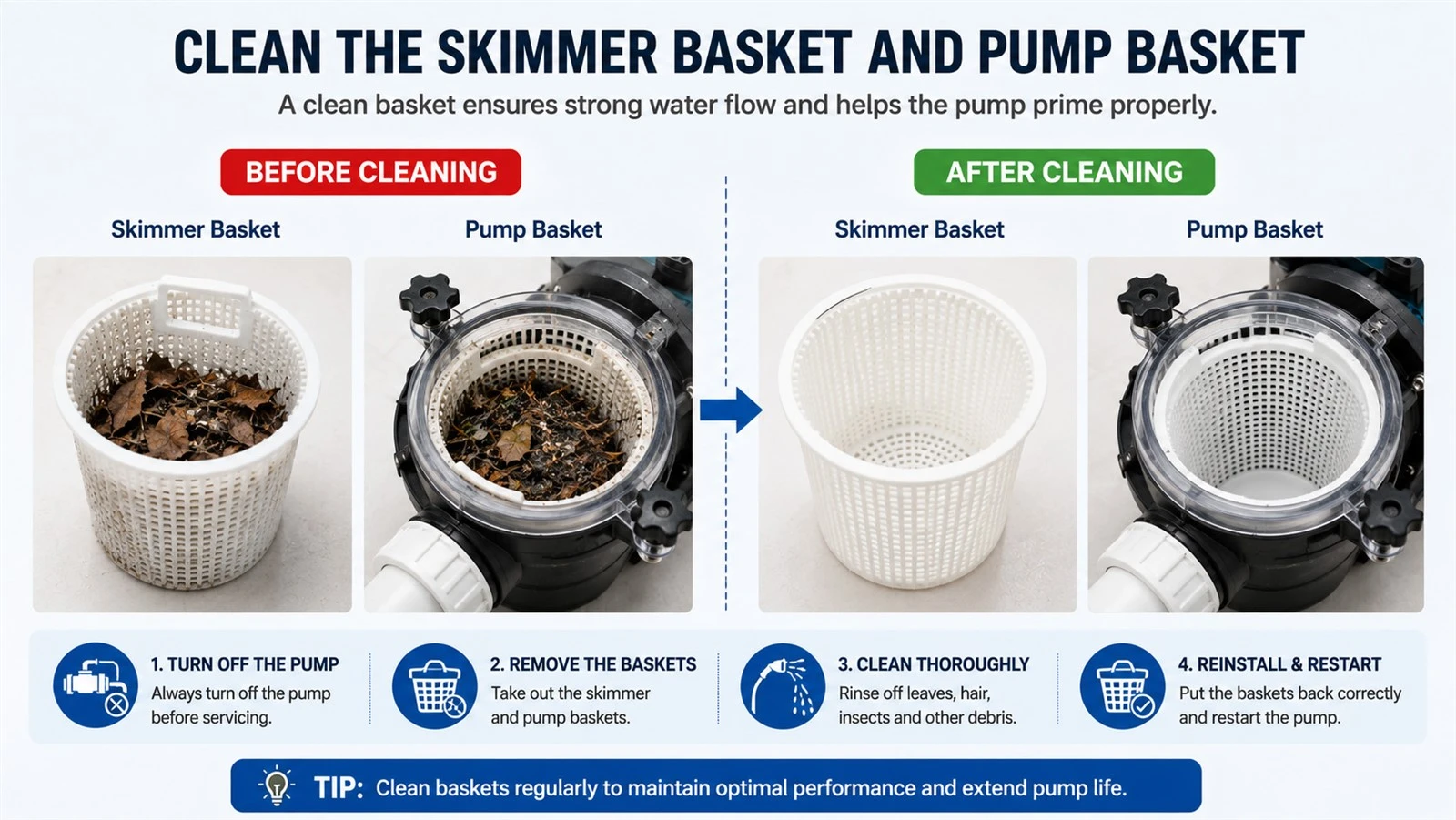
A blocked basket can reduce the amount of water reaching the pump. Leaves, hair, insects and other debris may collect in the skimmer basket or pump basket.
When the basket is too dirty, the pump may sound like it is working, but water flow becomes weak. This can make the pump difficult to prime.
Turn off the pump, remove the baskets and clean them thoroughly. After cleaning, make sure the baskets are installed correctly before starting the pump again.
Look for Air Leaks on the Suction Side
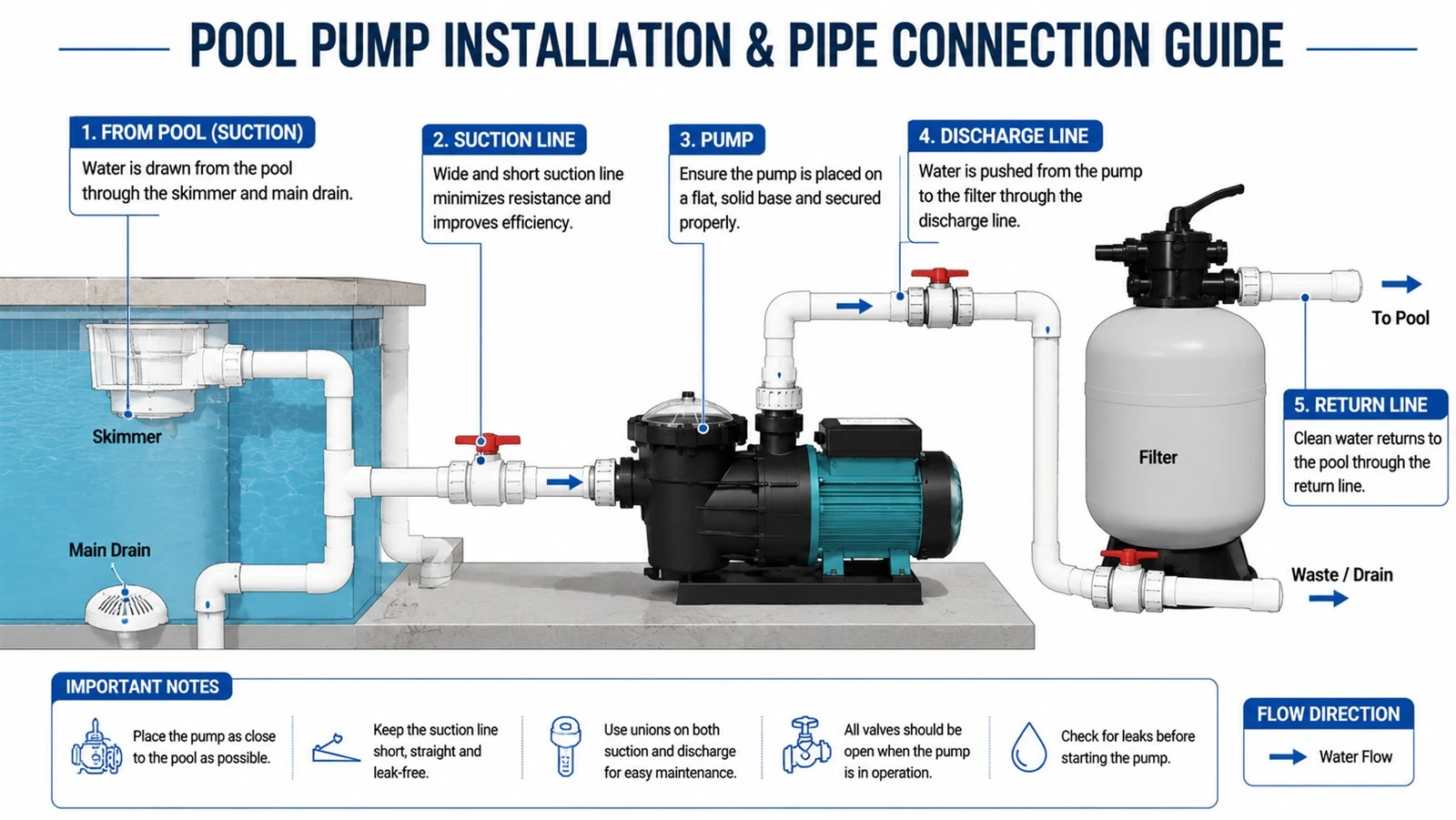
The suction side is the part of the system before water enters the pump. It includes the skimmer line, suction pipes, valves, unions, fittings and pump inlet.
If there is a loose connection or damaged seal on this side, air can enter the system. This air prevents the pump from pulling water smoothly.
Common signs of suction-side air leaks include continuous bubbles in the pump basket, bubbles returning to the pool and unstable water flow.
Check whether the pipe connections, valve seals, drain plugs and unions are tight. If the air leak is hidden underground or inside the pipe, professional inspection may be needed.
Check Whether the Valves Are Open
Sometimes a pool pump does not prime simply because water cannot reach it. This may happen after maintenance, filter cleaning or seasonal pool opening.
Before starting the pump, check the valve positions. Make sure the suction valve is open and water can flow from the pool to the pump.
If the valve is closed or set incorrectly, the pump may run without receiving enough water. Correcting the valve position may solve the problem immediately.
The Impeller May Be Blocked
The impeller is the part inside the pump that pushes water forward. If small debris passes through the basket and reaches the impeller, it can reduce water flow.
A blocked impeller may cause low pressure, weak circulation and difficulty priming. The pump may still run, but it cannot move enough water.
Cleaning the impeller usually requires opening part of the pump. If the user is not familiar with pump maintenance, it is safer to ask a technician for help.
Installation Can Also Affect Priming
A pool pump works best when it is installed in a suitable position with proper piping. If the pump is installed too high above the pool water level, it may be harder to pull water.
Long suction pipes, too many elbows, undersized pipes or poor sealing can also make priming more difficult.
For new pool projects or pump replacement, installation design is very important. A suitable pump position and correct pipe size can reduce future priming problems.
Simple Steps to Prime a Pool Pump
For many pool systems, the following steps can help restart the pump:
Turn off the pump.
Open the pump lid.
Remove and clean the pump basket.
Fill the pump housing with clean water.
Check the O-ring and close the lid tightly.
Make sure the correct valves are open.
Start the pump and observe the water flow.
If the pump still cannot prime after several attempts, stop the pump and continue checking for air leaks, blockages or installation issues.
When Should the Pump Be Replaced?
If the pool pump often loses prime, leaks water, makes abnormal noise or cannot maintain stable flow after repeated cleaning and inspection, the pump may be worn or damaged.
Old pumps may have aging seals, worn internal parts or reduced hydraulic performance. In this situation, replacing the pump can sometimes be more practical than repeated repairs.
When choosing a new swimming pool pump, it is important to consider pool size, required flow rate, pipe size, voltage, frequency and installation conditions.
Conclusion
A pool pump that is not priming usually has a problem with water supply, air leakage, blockage or installation. Before assuming the pump is broken, check the water level, pump lid, O-ring, baskets, valves and suction-side connections.
Most simple priming problems can be solved by cleaning the system, sealing the pump lid correctly and making sure enough water reaches the pump.
If the problem happens again and again, the pump or piping system may need professional inspection. A properly selected and correctly installed pool pump can help keep the swimming pool circulation system stable and efficient.
Looking for a reliable swimming pool pump supplier? Contact us to get a suitable pool pump solution according to your pool size, flow rate, voltage, frequency and installation requirements.