


A sewage pump alarm has a habit of sounding at the worst possible time. It may happen overnight, while the laundry is running, or just after several hours of heavy rain. The natural reaction is to press reset and hope the light goes out.
Sometimes it does. That does not necessarily mean the problem is gone.
The alarm is not a detailed fault report. It simply means the water has reached a level that the system considers abnormal. Perhaps the pump has stopped. Perhaps it is still running but cannot lower the water quickly enough. There may even be nothing wrong with the pump itself. After heavy rain, the trouble is often somewhere outside the motor.
The first useful question is not "Which pump should I replace?" It is "What is the water level doing right now?"
What to Look at First

If the pump is running and the level is coming down, leave the connected fixtures alone for a while.
Stop the washing machine, avoid showers and keep toilet use to a minimum. The pump may simply be working through a temporary peak.
If the motor is running but the level hardly moves, replacing the float switch will probably achieve nothing. The pump may have a restricted inlet, a partly blocked impeller or a problem in the discharge line. A closed isolation valve is another possibility. So is a check valve jammed by debris.
The downstream sewer also matters. During intense rain, a municipal sewer can become heavily loaded. The pump then has to work against more pressure than it sees on a normal day. Flow falls, the run time becomes longer, and the water in the tank may continue rising even though the motor sounds normal.
If the pump is silent, look at the control panel before going near the tank. Is the power light on? Has an overload tripped? Is there a separate pump fault as well as the high-level warning? Storms do not always cause a complete power cut. A short voltage drop can be enough to stop some equipment or trip protection.
There is no reason for an owner or hotel employee to open the collection tank. A closed sewage tank can contain contaminated water, harmful gases and electrical parts. Most of the first checks can be made from outside: panel lights, motor sound, obvious pipe movement and whether nearby drains are beginning to back up.
One point is easy to miss. Silencing the horn only silences the horn. It does not lower the water.
Get a Custom Pump Recommendation
Why It Happens More Often in Wet Weather
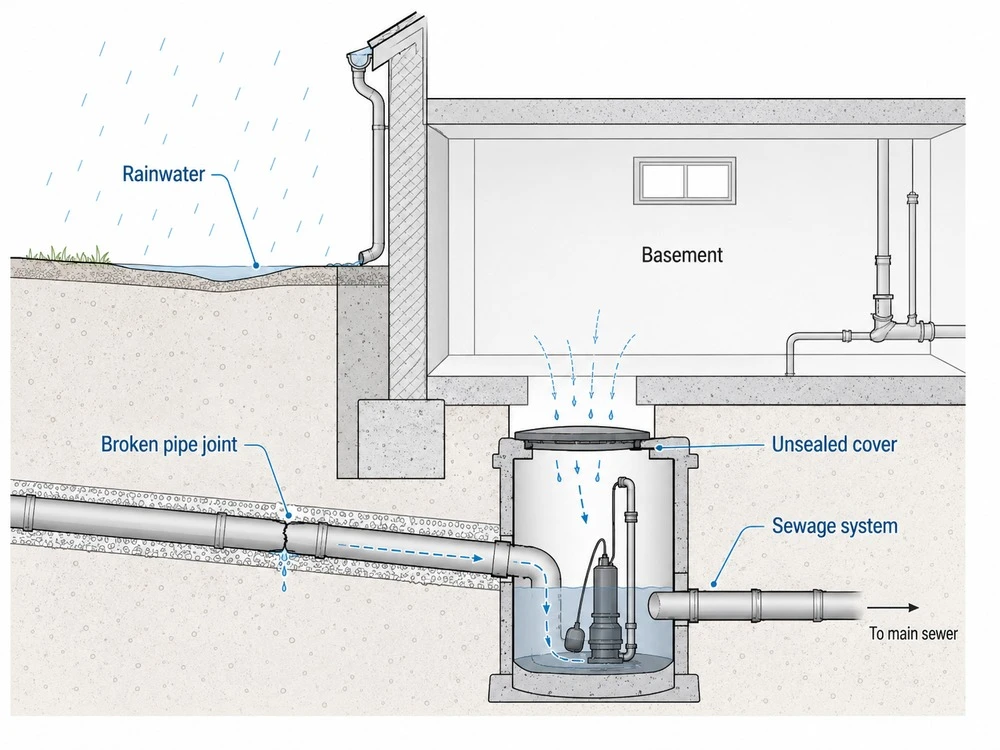
In a correctly separated drainage system, rainwater should not enter the sewage lifting station.
Older buildings are rarely that simple. Underground joints leak. Tank covers are not always sealed well. Cable entries are sometimes left loose after maintenance. We also come across drainage layouts where a yard drain or another rainwater source has been connected to the wrong pipe.
Any one of these faults may go unnoticed during dry weather. A storm exposes it. The pump suddenly receives water that was never included when the system was selected.
Return flow can make matters worse. If the check valve does not close properly, water in the vertical discharge pipe falls back into the tank after every cycle. On an ordinary day, the only sign may be that the pump starts more often than expected. During rain or a busy period, that wasted capacity becomes much more obvious.
The alarm float itself is not beyond suspicion. Toilet paper, grease or a loose cable can hold it in the wrong position. Air-pressure systems have their own weak point: a damaged or blocked sensing tube. Still, we would not assume it is a false alarm until the actual level has been checked safely.

Once the immediate problem is under control, the inspection should move beyond the pump. Check the lid and pipe entries for signs of water ingress. Confirm that stormwater is not sharing the sewage line. Inspect the check valve and make sure all isolation valves are fully open. If the pump has been removed, look at the impeller and inlet rather than only testing whether the motor turns.
It is also worth comparing the building today with the building the pump was selected for. A basement may have started with one toilet and a basin, then gained a shower and washing machine. A small hotel laundry may now run twice as many cycles. The original pump has not become weaker; the job has become bigger.
For a property that cannot stop using water, one pump and one alarm may not provide much breathing room. A duplex lifting station can alternate the daily workload and bring the second pump in when the inflow rises. It also gives the operator some protection when one pump needs attention. That does not replace good maintenance or emergency power, but it can prevent a minor fault from immediately becoming a building-wide drainage problem.

Before the next rainy period, run a simple alarm test. Check the float movement, pump start and stop levels, non-return valve and panel protection. Write down how long a normal pumping cycle takes. If the same cycle takes noticeably longer a few months later, the system is already telling you something.
A sewage pump alarm after heavy rain should not automatically lead to a new pump order. Start with the level, follow the water through the pipework and find out where the extra load came from. More often than not, that saves both time and an unnecessary replacement.
If the existing system no longer suits the building, the next step is to compare compact lifting stations, grinder pumps and duplex packages using the real peak inflow and discharge route, not only the motor power shown on the nameplate.