


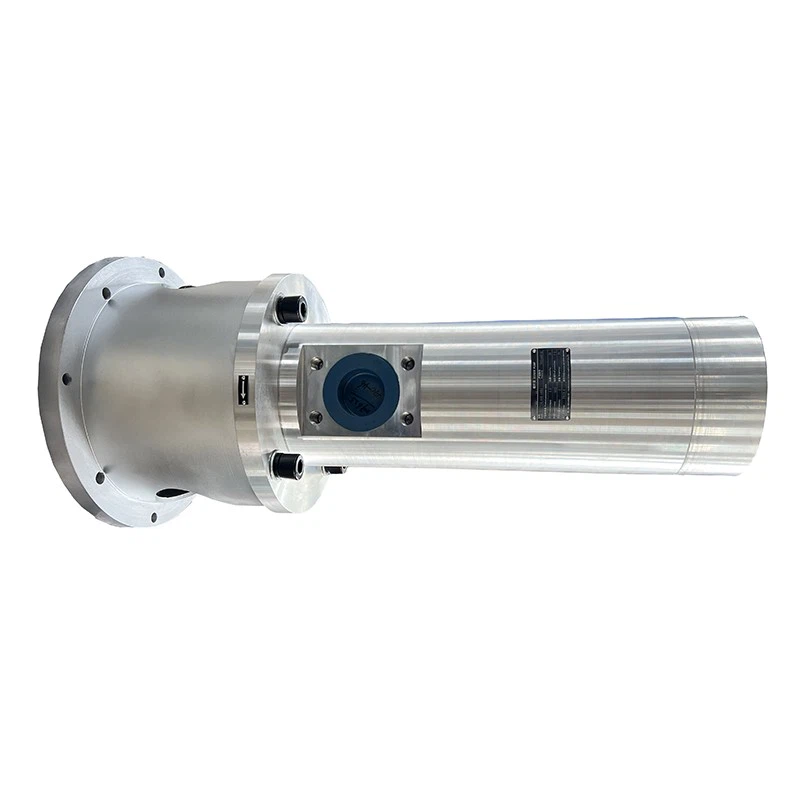
A high pressure screw pump is a positive displacement pump. It uses the pump body and intermeshing screws to divide the screw grooves into multiple independent sealed chambers, thereby separating the pump inlet from the discharge port.
MISLIER high pressure screw pumps are suitable for the transfer, circulation, lubrication and pressure boosting of lubricating oil, hydraulic oil, fuel oil, vegetable oil and other clean viscous liquids. The continuously rotating three-screw structure produces relatively smooth, low-pulsation flow and is suitable for industrial systems requiring stable pressure, low operating noise and reliable continuous operation.
Structural decomposition

Working Principle
-
When the high pressure screw pump is operating, the driving screw rotates in a fixed direction and drives the two driven screws to rotate simultaneously. At the suction port, the sealed chambers formed by the screw grooves gradually increase in volume, drawing liquid into the pump.
When a chamber reaches its maximum volume, the meshing screw profiles seal it. The liquid in the sealed chamber then moves axially toward the discharge port. At the discharge end, the chamber volume gradually decreases, continuously discharging the liquid.
Because the liquid is transferred continuously along the screw axis, flow and pressure fluctuations are relatively small. In lubrication, oil-supply and circulation systems, this transfer method helps reduce vibration and pulsation while maintaining relatively stable system pressure.
Type of conveying medium
| Medium | Alubricating liquid | ||||
| Lubricant | Water glycol | Vegetable oil | Heavy oil | Residual oil | |
| Applicability | ☆☆☆ | ☆☆☆ | ☆☆☆ | ☆ | ☆ |
| Medium | Low lubricating lisuid | ||||
| Light diesel oil | Heacy diesel | Waxy thin oil | |||
| Applicability | ☆ | ☆ | ☆ | ||
| Medium | Viscous liquid | ||||
| All kinds of synthetic rubber | Artificial glue | Emulsion | Lubricationg grease | ||
| Applicability | ☆ | ☆ | ☆ | ☆ | |
Why Do Customers Choose a Three Screw Pump?
-
Do not select a pump based only on maximum pressure!
Operating stability, medium compatibility, maintenance cost, installation space and system integration also affect the final project result.
Smooth, low-pulsation transfer: Suitable for lubrication, oil circulation and fuel-supply systems that require stable pressure.
Suitable for continuous operation: When correctly selected, installed and maintained, it can be used in industrial equipment requiring long operating hours.
Flexible installation: Horizontal, vertical or immersion configurations can be selected according to the equipment layout.
Application-specific configuration: Bearings, seals, motors and connections can be confirmed according to the medium, temperature, pressure and project requirements.
Convenient OEM system integration: Baseplates, couplings, connections, motors and packaging can be evaluated according to project requirements.
Structural Components
1. Three-Screw Structure
A low-pressure balancing mechanism is used for the axial forces of the driving and driven screws, helping distribute internal forces more evenly. As the screws rotate, the medium moves along the spiral grooves toward the outlet.
2. Sealing Structure
A skeleton oil seal is used, keeping the seal chamber pressure connected with the suction pressure. This structure helps improve sealing reliability and reduce leakage.
The actual seal arrangement should be selected according to the medium, working pressure, temperature and allowable leakage. When transferring hot oil, volatile liquids or special chemical media, complete medium data should be provided before pump selection.
3. External Structure
The external pump structure mainly consists of an integrated pump liner, front cover and rear cover.
4. Relief Valve Assembly
The relief valve provides immediate overload protection for the high pressure screw pump, but it must not be used as a pipeline pressure-relief valve.
The system should still include suitable pipeline overpressure protection and control devices. The pump relief valve is mainly intended for short-term overload protection and should not be used continuously for bypassing or flow regulation.
Applications
Used as a fuel, fuel-supply and transfer pump in heating equipment.
Used as a hydraulic, lubrication or remote-motor pump in the machinery industry.
Used as a loading, transfer and liquid-supply pump in chemical, petrochemical and related industries.
Used on ships as a transfer, boosting, fuel-injection and lubrication pump, as well as a pump for marine hydraulic systems.
Suitable Conveying Media
|
Medium Type |
Typical Media |
Selection Guidance |
|
Lubricating liquids |
Lubricating oil, hydraulic oil, vegetable oil |
Generally suitable; viscosity, temperature and material requirements must be confirmed. |
|
Fuel oils |
Light diesel, heavy diesel, heavy fuel oil, residual oil |
Lubricity and viscosity must be evaluated, and heating requirements confirmed. |
|
Low-lubricity liquids |
Water-glycol fluids, etc. |
Technical evaluation is required; an external-bearing design may be recommended. |
|
Viscous liquids |
Emulsions, synthetic adhesives, grease, etc. |
Model-specific evaluation is required; provide viscosity at operating temperature. |
Important: Standard three screw pumps are mainly intended for clean media. Liquids containing hard particles, abrasive impurities or fibers are generally unsuitable because the contaminants may damage the screw surfaces, bearings and sealing system.
Screw pump installation method
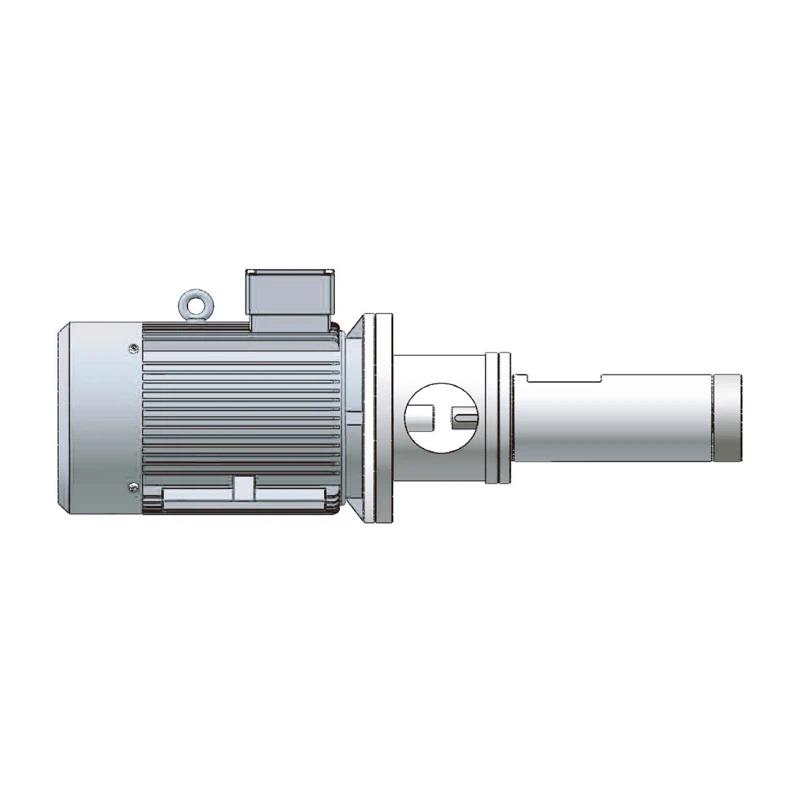
Horizontal installation
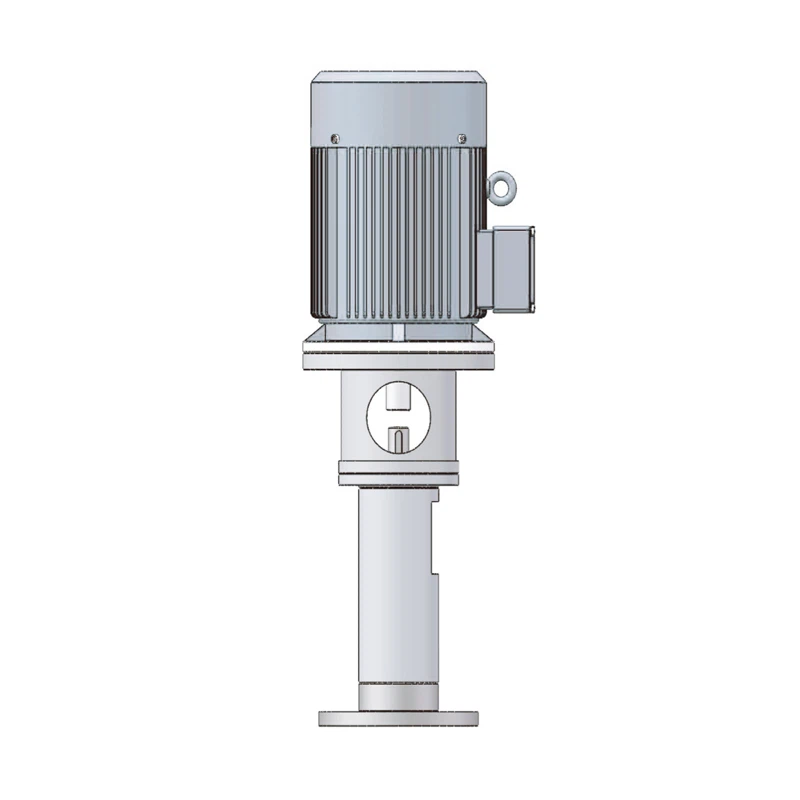
Vertical installation
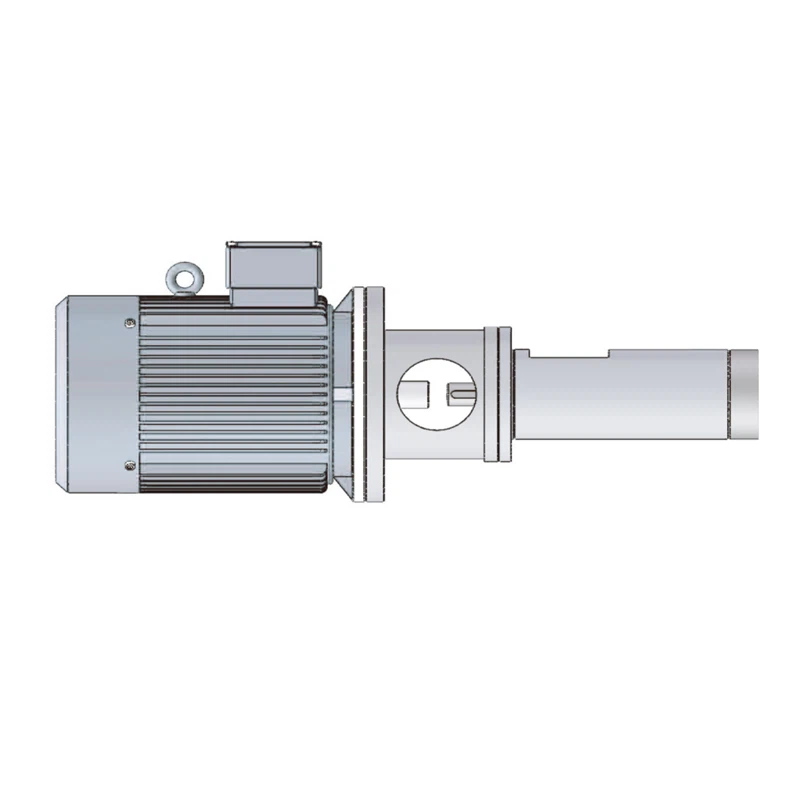
Immersion installation
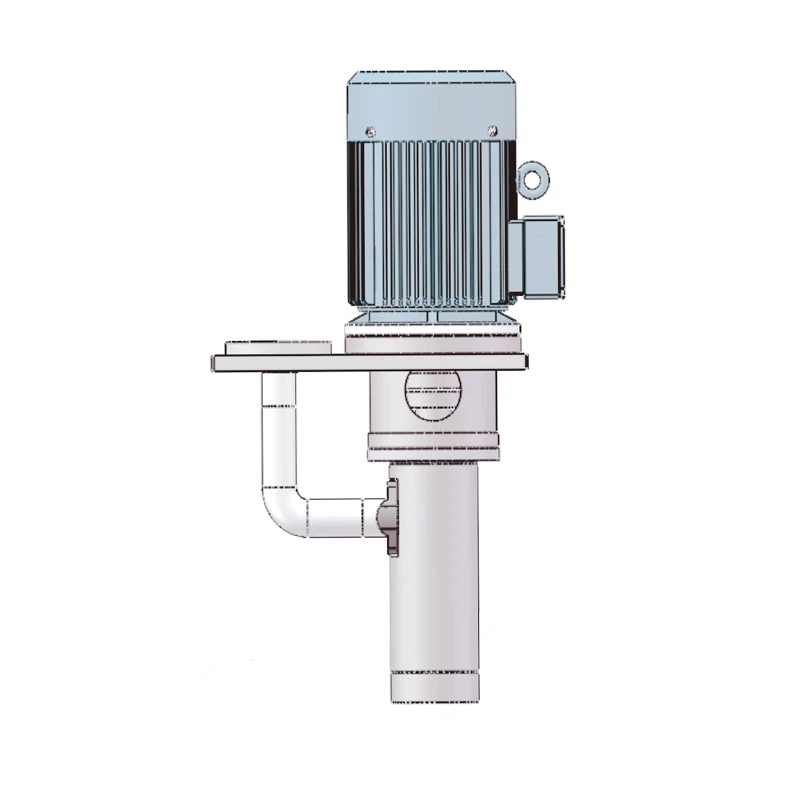
Immersion installation with rectangular plates
Performance Requirements
The medium should have lubricity or partial lubricity.
The medium must not contain solid particles.
Flow range: 10–3600 L/min.
Working pressure: ≤4.0 MPa.
Speed range: 500–3000 r/min.
Viscosity range: 3–750 mm²/s.
Operating temperature: −5 to 150°C.
Allowable suction lift: ≤8 m.
The values above represent the overall coverage of the product series and do not mean that one model can reach all maximum values simultaneously. Actual flow, pressure, speed, motor power and suction capability are affected by pump size, medium viscosity, operating temperature, inlet conditions and system resistance. Final selection should be based on the performance curve of the specific model and technical confirmation.
Installation Options:
Horizontal installation.
Vertical installation.
Immersion installation.
Immersion installation with a rectangular mounting plate.
Allow sufficient space for coupling alignment, seal inspection, filter cleaning and routine maintenance. The suction piping should be as short and direct as possible, with fewer elbows, reducers and air pockets. Unless the selected design is specifically approved for it, do not allow the pump to run dry for an extended period.
How to Select the Right High Pressure Three Screw Pump?
Accurate selection should begin with medium data rather than flow and pressure alone. The viscosity of the same oil can vary significantly between cold startup and normal operating temperature, affecting suction loss, shaft power, starting torque and the appropriate pump speed.
Get a Custom Pump Recommendation
Confirm the medium: Provide the exact name, composition and lubricity, and indicate whether water or contaminants may be present.
Confirm viscosity: Provide viscosity at normal operating temperature. If low-temperature startup is possible, also provide startup viscosity.
Provide the duty point: Specify the required flow, inlet pressure and discharge pressure, and indicate whether these are continuous or peak values.
Confirm temperature and materials: Provide the minimum, normal and maximum medium temperatures and indicate whether the medium is corrosive.
Describe installation conditions: Provide the suction lift or flooded-suction conditions, pipe diameter, pipe length, installation orientation and available space.
Confirm electrical requirements: Provide voltage, frequency, phase, protection rating and whether an explosion-proof motor is required.
Describe the operating mode: State whether operation is continuous or intermittent, annual operating hours, start-stop frequency and whether variable-speed control is required.
Selection Notes:
1. If the medium has poor lubricity, an external-bearing design is recommended. If the medium has good lubricity, an internal-bearing design can be selected.
2. When medium viscosity is ≤380 mm²/s, the speed may be 1450 r/min or 2900 r/min; 1450 r/min is recommended.
3. When medium viscosity is >380 mm²/s, 950 r/min is recommended. Higher speed increases inlet velocity and may reduce pump reliability and service life. The appropriate speed should therefore be selected according to the complete operating conditions.
4. To ensure safe operation, a 40–80 mesh filter should be installed upstream of the pump inlet.
5. The pump NPSHr must be lower than the system NPSHa. If NPSHr > NPSHa, select a larger pump with a smaller helix angle and recalculate NPSHr.
6. After the pump model is determined, obtain shaft power N from the sample data and select motor power Nm according to the applicable power-matching requirements.
Additional Pump Selection and System Recommendations
Filter selection should not be based on mesh size alone. Medium viscosity, allowable pressure drop and contamination level must also be considered. A filter that is too fine or too small may cause excessive inlet resistance. For critical systems, consider differential-pressure indication and have the system engineer determine a suitable bypass and protection arrangement.
The NPSH calculation should include medium vapor pressure, suction-pipe losses, liquid level, tank pressure, operating temperature and filter pressure drop. A reasonable safety margin should be retained during selection rather than allowing NPSHa and NPSHr to remain at the theoretical limit.
Motor power should be selected by considering differential pressure, viscosity, speed, pump efficiency, starting torque and cold-start conditions. When a variable-frequency drive is used, confirm the permitted speed range, motor cooling conditions and minimum operating speed.
Material, Seal and Motor Selection
|
Selection Item |
Information the Buyer Should Confirm |
|
Pump body and screw materials |
Medium compatibility, corrosion risk, operating temperature and expected service life. |
|
Seal arrangement |
Medium, pressure, temperature, leakage requirements and maintenance method. |
|
Bearing design |
Medium lubricity and whether the bearing can safely contact the pumped liquid. |
|
Motor |
Voltage, frequency, phase, protection rating, insulation class and explosion-proof requirements. |
|
Connection standard |
Flange standard, port size, orientation and compatibility with the existing piping. |
|
Accessories |
Baseplate, coupling, guard, filter, pressure instruments and spare parts. |
Quality Control Before Shipment
A clear inspection process helps reduce installation and commissioning risks. Specific inspection items should be agreed in advance according to the selected model and order requirements.
Appearance, dimensions and nameplate inspection.
Rotating-component and assembly-condition inspection.
Seal and leakage inspection under the agreed test conditions.
Flow, pressure, motor current and operating-condition testing where applicable.
Noise, vibration and abnormal temperature-rise checks.
Final inspection of documents, accessories and spare parts before packing.
Where required, performance curves, dimensional drawings, installation instructions, inspection records and recommended spare-parts lists can be provided.
OEM Project Support
MISLIER can evaluate configurations according to the project requirements of distributors, equipment manufacturers, system integrators and engineering contractors. Items that may be discussed include motor voltage and frequency, connection standards, installation arrangement, baseplate and coupling configuration, nameplate, packaging and spare-parts support. Specific feasibility and minimum-order requirements are subject to order confirmation.
For a more accurate quotation, customers are advised to provide both the required quantity and complete duty data. This allows the technical team to recommend a configuration according to the actual application rather than quoting only by inlet and outlet size.
FAQ:
1. What liquids can a high pressure three screw pump transfer?
It is mainly used for clean liquids with a certain degree of lubricity, including various lubricating oils, hydraulic oils and fuel oils. Some vegetable oils, emulsions and viscous liquids may also be suitable, subject to technical evaluation of the medium composition, temperature and viscosity.
2. Can it transfer liquids containing solid particles?
A standard high pressure three screw pump is not suitable for liquids containing hard or abrasive particles. Particles may damage the screw surfaces and internal clearances. A suitable inlet filter should therefore be installed, and the tank and piping should be kept clean.
3. How does viscosity affect pump selection?
Viscosity affects suction loss, internal leakage, shaft power, starting torque and applicable speed. High-viscosity media generally require a lower speed, and some applications also require heating. Selection must use viscosity at the actual operating temperature.
4. Can it transfer heavy fuel oil?
Heavy fuel oil can be evaluated when its viscosity, temperature and lubricity meet the requirements of the selected model. Heavy-oil systems generally require insulation or heating to maintain a reasonable viscosity during cold startup and normal operation.
5. Why must NPSHa and NPSHr be calculated?
The system NPSHa must be higher than the pump NPSHr. An insufficient margin may cause cavitation, noise, unstable flow and component damage. Suction piping, temperature, liquid level and filter pressure drop should all be included in the calculation.
6. Is OEM support available?
Electrical specifications, connection standards, installation arrangement, baseplate, coupling, guard, nameplate, documentation and packaging can be discussed according to the project. Available options, minimum order quantity and lead time should be confirmed for each project.
Submit Your Duty Conditions for Pump Selection Support
Please provide the medium name, viscosity, operating temperature, required flow, inlet pressure, discharge pressure, voltage, frequency, installation method and purchase quantity. MISLIER will evaluate the actual duty conditions and recommend a suitable high pressure three screw pump configuration for your project.
Hot Tags: high pressure screw pump, China high pressure screw pump manufacturers, suppliers, factory


