


Sewage pump clogging is rarely caused by one simple problem. The word clog is used for almost every drainage failure: a jammed impeller, a blocked inlet, a closed or stuck check valve, an air-locked casing, a small discharge pipe, a worn cutter, a trapped float, or a pump that cannot overcome the real system head. The motor may run and make normal noise while the basin level continues to rise. To the user, all of these faults look like the same thing - sewage is not leaving.
Current search behaviour reflects that confusion. People look for sewage pump clogged, sewage pump not pumping, grinder pump clogging and macerator pump blockage, often after an alarm has already sounded. Good sewage pump troubleshooting must separate the symptom from the cause. Pulling out visible waste may restore flow for a day, but it will not fix a mismatched pump, poor basin design or restrictive pipework.
This guide covers submersible sewage pumps, cutter and grinder pumps, compact toilet macerators and packaged lifting stations. The details vary by product, but the diagnostic logic is consistent: make the system safe, observe exactly what it is doing, trace the wastewater path, then check whether the pump and pipework were suitable for the duty in the first place.

First decide what kind of failure you actually have

Any sewage pump troubleshooting should begin with safety. Before opening a basin or removing a pump, isolate the electrical supply and follow the manufacturer's service procedure. Sewage can contain disease-causing organisms and toxic or flammable gases. Never enter a used sewage basin without proper confined-space equipment and training, and never put hands near an inlet, impeller or cutter while power can be restored. If the system serves a building, stop or reduce incoming wastewater before the level reaches an overflow point.
Now describe the symptom precisely. A pump that does not start has a different fault path from a pump that starts but produces no flow. A pump that empties the basin slowly may be restricted or operating against excessive head. A pump that works for several cycles and then trips may be overheating or mechanically overloaded. A system that clears after manual cleaning but blocks again every few weeks has a recurring solids or installation problem.
Listen and observe without bypassing safety devices. Does the control panel show overload, phase loss or high level? Does the motor hum but fail to rotate? Does the liquid level fall at all? Is there strong vibration, a new grinding sound or rapid clicking from the check valve? Does the pump start and stop repeatedly? These details help distinguish electrical, mechanical, hydraulic and control faults.
For duplex stations, identify which pump is running. One unit may be unavailable while the other carries the station until peak flow arrives. Confirm whether the pumps alternate, whether the lag pump starts at high level and whether both discharge valves are open. A blocked or isolated standby pump can remain unnoticed for months because the lead unit hides the problem during normal demand.
The fastest diagnostic question is often this: did the system ever work correctly? If performance was poor from the first day, look first at selection, rotation, pipe size, static lift, valve position and installation. If the station worked for years and changed suddenly, look for foreign objects, worn parts, a failed float, a blocked valve or a change in the wastewater source.
The main reasons sewage pumps clog or stop pumping

1.Wipes, fabric and stringy materials enter the system
The most familiar cause is also the most misunderstood. Many items advertised as disposable do not break down like toilet paper. Wet wipes, cleaning cloths, mop strands, sanitary products, gloves, dental floss and hair can wrap around the impeller hub or shaft. A vortex impeller may reduce direct contact with solids, but long fibres can still form a rope. In a cutter or grinder, the material may fold, stretch or bridge across the cutting plate instead of entering at the intended angle.
A more powerful motor is not a complete answer. Extra torque may delay the blockage, but it can also pull more material into a tight mass and increase cutter wear. Commercial buildings need source control: bins in washrooms, clear notices, staff training and procedures for laundry or cleaning areas. In hotels and hospitals, one inappropriate waste stream can create repeated service calls even when the pump is correctly selected for normal sewage.
2.The pump type does not match the solids
A sump pump, effluent pump, sewage pump, cutter pump and grinder pump can look similar in a photograph. Their internal passages are not the same. A drainage or sump pump is normally intended for relatively clean water with limited debris. An effluent pump handles liquid after larger solids have settled. A sewage pump passes a stated solid size. A grinder reduces solids before sending them into a pressure line. Using a clean-water or gray-water pump for toilet waste often produces a predictable blockage.
Even within sewage pumps, impeller choice matters. Vortex designs provide an open path and are forgiving with mixed solids, although efficiency may be lower. Channel impellers can be efficient but must have adequate free passage. Cutter designs help with fibres, while grinders are intended to create a fine slurry. Abrasive sand, heavy rags and hard foreign objects demand different solutions. Selection should be based on the real waste, not only the word sewage on a sales page.

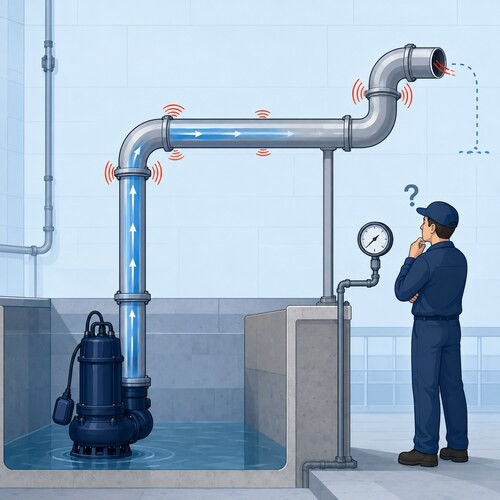
3.The pump cannot overcome the real total dynamic head
A pump can run normally and still move almost no wastewater if the system head is near its shutoff point. This is often mistaken for a clog. The buyer may have considered only vertical lift and ignored a long horizontal run, small pipe, elbows, reducers and check-valve losses. The catalog maximum head is then treated as a working height, even though flow approaches zero at maximum head.
Compact macerators are especially sensitive to this mistake because they use small discharge pipework. A unit with a 9 m maximum lift is not guaranteed to deliver its maximum flow at 9 m. If the bathroom is 7 m below the connection and the pipe also travels a long distance with multiple bends, the operating point may be outside the useful curve. The basin fills faster than the unit empties, and the user describes the result as a blockage.
4.The discharge pipe or check valve is restricted
The pump is only one part of the wastewater path. A blocked elbow, undersized reducer, partially closed isolation valve, stuck check valve or accumulated deposit can prevent discharge. Grease can cool and build up on pipe walls. Fine slurry can settle in a low point when velocity is too low. A damaged flexible connector can collapse internally. If the pump has been replaced but the old discharge line was not inspected, the new unit may inherit the same failure.
Check-valve problems create several symptoms. A valve stuck closed produces little or no flow. A valve stuck open allows the full pipe contents to return after the pump stops, so the station cycles repeatedly and pumps the same liquid again. A heavy valve can slam, while a valve installed backwards blocks the line from the first test. Valve loss must be included in pump sizing and the valve must remain accessible for service.


5.Air is trapped in the casing or discharge
An air lock can make a submerged pump sound as if it is operating while the impeller is not moving liquid effectively. Air may become trapped after the basin has been emptied, after maintenance, or when the inlet flow aerates the liquid. Some pump installations require a small anti-airlock or relief hole in the discharge arrangement. Its position and size should follow the manufacturer's instructions. A missing hole can allow air locking; an incorrectly added hole can leak, clog or reduce performance.
Compact lifting units also need correct venting. Poor tank ventilation can interfere with level sensing and drainage from connected fixtures. The vent should not be treated as an optional odor pipe, and it should not be capped simply because smell is present. Odor usually calls for checking seals, traps, ventilation routing and tank cleanliness, not blocking the pressure-balancing path.
6.The float or level control cannot move correctly
A pump may be blamed for a basin that never sends the correct start signal. Tethered floats can catch on the pump, basin wall, pipe or accumulated debris. Vertical floats can become coated with grease or solids. Pressure tubes and level sensors can block. If the pump starts only when the float is lifted manually, the hydraulic section may be healthy and the control arrangement may be the real fault.
Incorrect start and stop levels can also encourage clogging. A low start level may produce very short cycles that never create enough basin movement to carry settled solids. A high stop level leaves excessive stagnant sewage. In a small tank, the float differential may be too narrow for the motor's recommended run time. The control setting should balance working volume, minimum submergence, inlet elevation, start frequency and alarm reserve.


7. Sediment, grease or dead zones build up in the basin
Not every blockage enters as one large object. Fine solids settle gradually where the basin floor is flat or the inlet creates a quiet corner. Grease forms a floating layer and can coat floats, sensors and tank walls. Laundry lint combines with grease into a dense mat. When the accumulated material finally reaches the pump, the blockage seems sudden even though it developed over months.
A good basin directs solids toward the pump and gives maintenance staff access for cleaning. The inlet should not strike the float or create excessive turbulence, but it should also avoid isolated dead zones. Commercial kitchens may need grease separation before wastewater reaches a lifting station. Construction sites should keep concrete washout, sand and debris away from sanitary pits. Pump selection cannot compensate indefinitely for poor upstream control.
8.The impeller, cutter or wear parts are damaged
A worn cutter may still rotate but no longer shear material cleanly. The clearance between rotating and stationary components can increase, causing fibres to fold and jam. A chipped impeller or eroded vane reduces head and flow. Mechanical seals or bearings may deteriorate after abrasive service. The motor continues to run, but emptying time grows and the system becomes more vulnerable to the next solids load.
Trend records make this easier to spot. If pump-down time gradually increases, current changes, or alarms become more frequent, investigate before total failure. Cleaning alone may hide wear for a short period. Cutter clearances, impeller condition, shaft movement and valve operation should be checked according to the service manual. Critical sites should keep suitable spares or a complete standby pump.


9.Rotation, voltage or electrical loading is wrong
A three-phase pump can run in reverse after wiring work. Reverse rotation usually produces less head and flow, and may create unusual vibration. The station can appear blocked even though the impeller passage is clear. Confirm rotation using the manufacturer's safe procedure. Do not rely only on motor sound, because a reversed motor can sound surprisingly normal.
Low voltage, phase imbalance, a weak capacitor on a single-phase motor or repeated overload trips can also reduce useful operation. A motor that hums without accelerating may have a jammed hydraulic section or an electrical starting fault. Resetting an overload repeatedly without finding the cause risks motor damage. Measure supply conditions and running current with appropriate equipment rather than bypassing protection.
10.The system is oversized, undersized or cycling too often
Undersizing is easy to recognize when peak inflow exceeds pump capacity. Oversizing is less obvious. A large pump in a small basin empties the working volume quickly, stops, receives drain-back and starts again. Frequent starts heat the motor and repeatedly shock the valve and pipework. Short runs may not develop the intended scouring pattern. Over time, deposits and component wear can turn a sizing issue into an apparent clogging issue.
The correct capacity is not the largest available model. It is the pump that supplies design flow at total dynamic head while giving acceptable run time and starts per hour. In duplex systems, one pump may handle routine flow and the second may assist at peak level. The combined operating point must be checked because pipe friction rises when both pumps run.

What to check when the motor runs but the basin does not empty
When a sewage pump is not pumping even though the motor runs, stop the system before the motor overheats. Confirm that the observation is real: check the level sensor and the discharge point. If the discharge is hidden, a faulty level indication can mislead the operator. Next, verify that the correct pump is running and that its isolation valve is open.
Trace the discharge path from pump to final connection. Look for a reversed or stuck check valve, closed valve, frozen section, crushed hose, blocked elbow or recent pipe alteration. If the system has a pressure gauge, compare running pressure with historical data. Very high pressure with little flow suggests a downstream restriction. Very low pressure may indicate an air lock, damaged impeller, open bypass or loss of hydraulic engagement.
For a new installation, verify static head, pipe diameter and rotation. Compare the required duty point with the actual pump curve. If the curve shows almost no flow at the calculated head, dismantling the pump will not solve the problem. The remedy may be a different hydraulic model or revised pipework.
For a system that failed suddenly after reliable operation, inspect for a foreign object and valve fault. A professional technician may need to remove the pump using its lifting arrangement, clean the inlet and examine the impeller or cutter. Never lift a submersible pump by its electrical cable. After service, test the station with clean water through multiple cycles before returning it to normal use.
If the pump runs briefly and trips, do not continue restarting it. Mechanical blockage, locked bearings, incorrect voltage, phase loss, excessive starts, operation outside the curve or inadequate cooling can all cause overload. Record the current on each phase, time to trip and liquid level, then compare them with the nameplate and manual.
How to prevent the next blockage
Key Factors
Choose the methods that suits you best.
begins with a realistic description of the wastewater.
State whether the station receives toilets, showers, kitchen water, laundry discharge, floor drainage, industrial washdown or stormwater. Describe wipes, fibres, grease, grit and temperature. The supplier can then choose a vortex, channel, cutter, grinder or compact macerator design rather than treating all sewage as the same liquid.
Set the basin and controls for a healthy operating cycle.
Confirm working volume, minimum submergence, start level, stop level, high-level reserve and acceptable starts per hour. Test floats or sensors under real inflow conditions. In duplex stations, verify alternating lead operation, lag start, high-level alarm and automatic changeover.
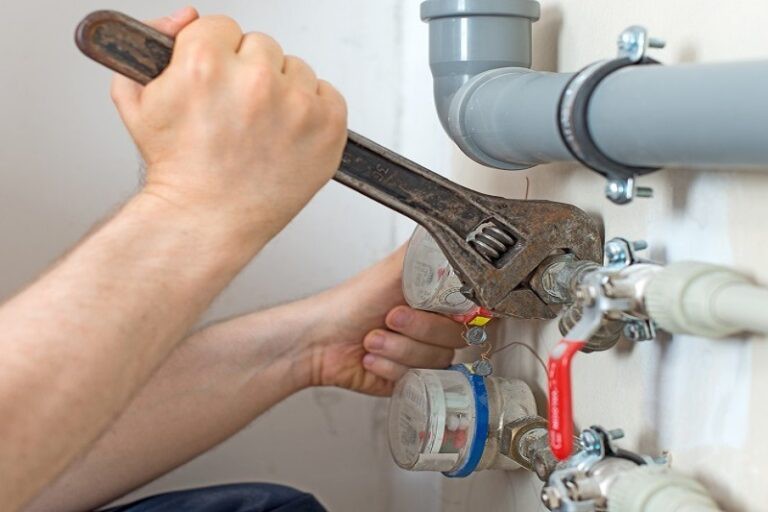
The pipe route should be calculated, not guessed.
Provide vertical lift, horizontal length, internal diameter, material, elbows, valves and final connection pressure. Select from the curve at total dynamic head. Maintain a line velocity that transports solids without creating excessive friction. Avoid unnecessary reducers, pockets and poorly supported flexible sections.
Maintenance should be based on consequence and wastewater severity.
A lightly used home ejector and a hotel laundry station do not need the same schedule. Record starts, run time, pump-down time and alarms. Inspect floats, cables, valves, basin deposits, noise and current. A small deterioration seen in trend data is cheaper to correct than an emergency high-level failure.
A real hotel lesson: solve the system, not only the clog
The Shanghai Meihua Hotel case shows how repeated sewage pump clogging can be a system problem. The hotel needed to handle wastewater from a laundry area and toilets, but the original arrangement suffered repeated blockage and could not discharge to the sewage pipeline. The route required roughly 10 m of lift, and the station had to cope with mixed wastewater and the consequences of downtime in an operating hotel.
An MSLR55D dual-pump lifting system was installed. The duplex arrangement addressed peak flow and redundancy, while the selected lifting performance matched the elevated connection. The system has now operated for about two years without a reported problem. The point is not that every hotel should use the same model. The lesson is that a recurring clog may be the visible result of several mismatches: solids, head, peak flow, pipework and lack of standby capacity.
If the team had only removed debris or fitted a larger motor to the existing arrangement, the drainage path could still have been wrong. The stable result came from treating the installation as a lifting system. That is the approach to use whenever a pump blocks repeatedly: identify what the wastewater contains, where it must go, how quickly it arrives and what happens if one component stops.

FAQ
Q: Can flushable wipes clog a sewage or grinder pump?
A: Yes. Many wipes remain strong in water and can wrap, bridge or combine with grease and other fibres. A grinder may reduce some material, but no sanitary pump should be treated as a general waste shredder. Follow the pump and wastewater authority guidance.
Q: Why does my sewage pump hum but not pump?
A: Possible causes include a jammed impeller, failed starting component, low voltage, air lock, blocked discharge or a stuck check valve. Isolate the pump and have the electrical and hydraulic sections checked. Do not keep resetting the overload.
Q: Why does the pump work after cleaning and clog again soon?
A: Repeated blockage suggests an ongoing waste source, wrong pump type, worn cutter, dead zone in the basin, low pipe velocity or inadequate duty point. Record what was removed and how long the pump runs, then review the whole system rather than repeating the same cleaning.
Q: Will a larger pump stop clogging?
A: Not necessarily. A larger pump may provide more torque or flow, but it may also short-cycle or overload the pipe. Solids-handling design, free passage, cutter type, total dynamic head and basin geometry matter more than motor power alone.
Q: How often should a sewage pump be inspected?
A: The interval depends on use, solids and failure consequence. Critical commercial stations need more frequent checks than lightly used residential systems. Base the schedule on manufacturer guidance and operating records, and test standby pumps and alarms rather than waiting for an emergency.
Q: When should I replace the pump instead of repairing it?
A: Replacement makes sense when the hydraulic design is wrong for the duty, major components are worn, parts are unavailable, failures are recurring or a newer configuration materially improves reliability. Compare lifecycle cost and downtime, not only the repair invoice.
Final recommendation
Recurring sewage pump clogging is evidence, not a diagnosis. Identify the exact symptom, protect the site, inspect the full wastewater path and compare the installed pump with the real duty. The most durable fix may be better source control, a repaired valve, revised pipework, a different impeller, a cutter or grinder, or a duplex lifting station.
For troubleshooting or replacement selection, send MISLIER the application, photos, wastewater description, required flow, vertical lift, pipe length and diameter, voltage, control method and alarm behaviour. Those details allow the problem to be reviewed as a system instead of recommending another pump by horsepower alone.

What to look at next
Once you know where the blockage is forming, the next useful step is to compare the pump design with the real waste stream. For fibrous or rag-prone sewage, take a closer look at MISLIER submersible sewage grinder pumps and cutter pump options. For a toilet or bathroom below the main sewer, the WL compact macerator pump range may be a better starting point. Where several fixtures share one drainage point, or downtime would disrupt a business, an MSLR sewage lifting station can provide more capacity and a duplex option.
If you are still deciding between those solutions, continue with our guide, How to Size a Sewage Pump: Flow, Head and Solids. It turns the observations from this troubleshooting process into a practical duty point. You can then compare flow, total dynamic head, pipe size, solids and control requirements before asking for a quotation, instead of choosing another pump by motor power alone.
Have an existing installation you want us to review? Prepare a few photos and the operating details listed above, then send them through the MISLIER contact page. A clear description of the problem usually saves several rounds of questions and helps our team recommend the most relevant pump family first.